Prevent Frozen Pipes: Winter Plumbing Checklist for Every Home
Winter doesn’t tiptoe in. It stomps down, bringing biting winds and freezing nights. Your pipes—hidden behind walls and under floors—aren’t always ready for the icy onslaught.
At Spencer Plumbing, our team knows just how quickly a cold snap can turn a quiet night into an emergency plumbing scramble. Frozen pipes can burst, flood rooms, and bring daily life to a halt. That’s why we’ve pulled together a winter plumbing checklist that works for every home and business, whether you’re facing Arctic blasts or just the occasional chilly spell.
Why Pipes Freeze ❄️
Water inside pipes is like a traveler caught in a snowstorm. When temperatures plummet, the water slows, thickens, and finally halts—turning into ice. This ice expands, pushing against pipe walls until something gives. Often, it’s the pipe itself.
But why do some pipes freeze and others don’t? Here’s what you need to know:
- Exposed pipes in unheated spaces (think basements, crawl spaces, attics, garages, and exterior walls) lose heat quickly.
- Poor insulation leaves pipes vulnerable, especially where cold air sneaks in.
- Drafts from gaps in windows, doors, or foundation cracks can chill pipes even if your home feels warm.
- Sudden temperature drops—even in milder climates—can catch pipes off guard.
According to the American Red Cross, pipes are most at risk when temperatures drop below 20°F (-6°C), but damage can occur well above that if pipes are unprotected.
At-Risk Areas in Your Home
Some pipes live dangerously close to the cold. These are the zones you’ll want to check first:
- Basements and cellars: Pipes running along outside walls or near vents.
- Crawl spaces: Low airflow and thin insulation make these trouble spots.
- Attics and garages: Unheated and exposed to outside temperatures.
- Exterior walls: Especially in older homes or businesses with minimal insulation.
- Under kitchen and bathroom sinks: Cabinet doors closed tight can trap in the cold.
Commercial properties might also face risks in utility rooms, empty office suites, or warehouses with infrequent use.
Step-by-Step Prevention Checklist 🧰
Ready to armor your pipes for winter? Use this checklist—print it out, stick it to your fridge, and check items off as you go:
1. Inspect and Insulate
- Walk through your home or building. Spot any pipes you can see in unheated areas.
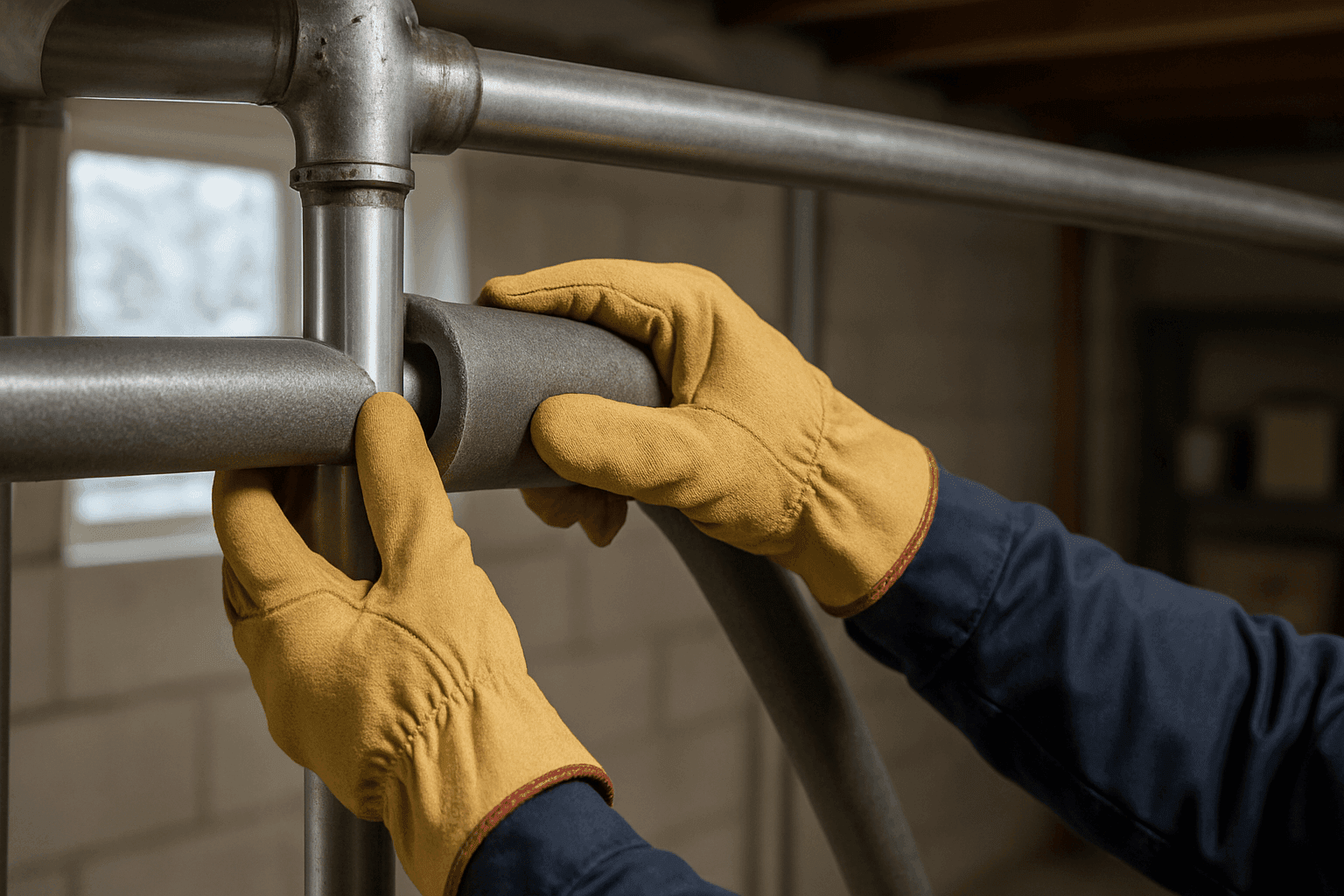
- Wrap exposed pipes with foam pipe insulation (available at most hardware stores).
- For severe cold, use UL-listed heat tape or thermostatically controlled heat cables. Follow manufacturer instructions and local code.
2. Seal the Gaps
- Check for cracks or holes around pipes where they enter walls, floors, or the foundation.
- Use caulk or spray foam to seal up drafts.
- Weatherstrip doors and windows in basements, garages, and crawl spaces.
3. Open Cabinet Doors
- Under sinks, open cabinets overnight when temperatures drop. This lets warm air circulate around pipes.
4. Let Faucets Drip
- On especially cold nights, allow a trickle of cold water to run from faucets fed by exposed pipes. It’s like keeping a river moving so it doesn’t freeze over.
5. Keep the Heat On
- Maintain indoor temperatures above 55°F (13°C), even when you’re away.
- For businesses, set thermostats accordingly in vacant spaces.
6. Monitor the Thermometer
- Use inexpensive temperature sensors or smart monitors in at-risk areas.
- Some smart sensors can send alerts to your phone if temps dip too low.
7. Drain Outdoor Lines
- Disconnect garden hoses, drain sprinkler lines, and shut off outdoor faucets (using the inside shut-off valve, if you have one).
8. Schedule a Professional Plumbing Inspection
- Spencer Plumbing techs hold winter-readiness certifications and can spot hidden risks before they become emergencies.
Printable Checklist:
- [ ] Insulate exposed pipes
- [ ] Install or check heat tape/cables where needed
- [ ] Seal cracks and gaps around pipes
- [ ] Weatherstrip drafty doors/windows
- [ ] Open under-sink cabinets during cold spells
- [ ] Let faucets drip on freezing nights
- [ ] Keep thermostat above 55°F (13°C)
- [ ] Set up temperature monitors in cold-prone areas
- [ ] Drain and shut off outdoor lines
- [ ] Book a winter plumbing checkup
Emergency Actions if Pipes Freeze 🚨
Sometimes, despite your best efforts, a pipe freezes. Here’s how to act fast—without making the problem worse:
1. Shut Off the Main Water Valve
- Know where your main shut-off is before an emergency hits. If a pipe bursts, turn it off immediately to stop flooding.
2. Open Faucets
- Open the tap connected to the frozen section. This relieves pressure and gives melting water somewhere to go.
3. Apply Gentle Heat
- Use a hair dryer, heat lamp, or warm towels around frozen pipes. Start near the faucet and work toward the coldest section.
- Never use open flames or torches. They can damage pipes or cause fires.
4. Check for Leaks
- Once the pipe thaws, watch closely for signs of leaks or bursts.
If a pipe has burst:
Move valuables and electronics away from affected areas. Call emergency plumbing services like Spencer Plumbing right away.
When to Call a Plumber
Some situations need immediate professional help:
- You can’t locate the frozen section.
- Thawing isn’t working, or you notice leaks after pipes thaw.
- There’s water damage, flooding, or you suspect a burst.
- Main water shut-off is stuck or inaccessible.
Spencer Plumbing offers rapid-response emergency plumbing services—day or night. Our plumbers arrive fast, with the tools and training to minimize damage and get your system back on track.
Regional Tips: Severe vs. Mild Climates 🏔️
For severe winters (regular lows below 20°F):
- Double up on insulation for all exposed pipes.
- Install permanent heat cables on vulnerable lines.
- Schedule annual professional inspections before each winter.
- Consider relocating exposed pipes indoors where possible.
For milder climates:
- Don’t skip insulation just because freezes are rare. Sudden cold snaps can cause major damage.
- Even a short freeze can burst pipes in homes unaccustomed to cold. Use faucet dripping and cabinet-opening tactics when a freeze is forecast.
Both regions benefit from regular preventative maintenance and quick action when temperatures fall.
What to Do if Pipes Burst
If you hear a pop or spot damp drywall, don’t panic. Here’s what to do:
- Shut off the main water supply immediately.
- Turn off electricity to the area if there’s water near outlets or appliances.
- Move valuables out of harm’s way.
- Call emergency plumbing near you for fast help.
- Take photos of the damage for your records.
Winter Certifications & Response
Spencer Plumbing’s technicians stay up to date with all local code requirements and safety standards. Our winter-readiness certifications mean your property is protected by the latest know-how. And with our 24/7 rapid-response service, help is always one call away—no matter what the thermometer says.
Frequently Asked Questions
How cold does it have to get before pipes freeze?
Most pipes start to freeze when temperatures dip below 20°F (-6°C), but poorly insulated pipes may freeze even at higher temperatures.
Can I use a space heater to thaw frozen pipes?
Yes, but only if used safely and never left unattended. Always keep heaters away from flammable material.
What’s the best insulation for pipes?
Foam pipe sleeves are a simple, effective solution. For extra protection, combine with heat tape on pipes most at risk.
Is dripping a faucet really necessary?
A slow drip can relieve pressure and prevent freezing in vulnerable pipes, especially during extreme cold snaps.
Your Winter Plumbing Toolkit
Peace of mind is worth every bit of preparation. With this checklist, a handful of supplies, and a trusted emergency plumbing partner like Spencer Plumbing, you’re ready to face whatever winter throws your way.
Stay warm, stay dry, and remember: If winter plumbing surprises you, help is just a call away.
Call Spencer Plumbing now — or reach us anytime at 888-875-3815 .